River · Rwanda, Burundi, DR Congo
Nile
The Nile flows north through eleven African countries before reaching the Mediterranean Sea. For thousands of years it has given water, food and transport to the people living along its banks.
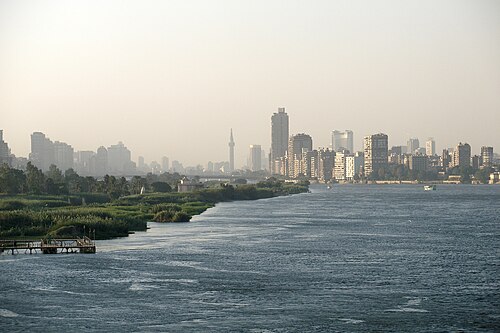
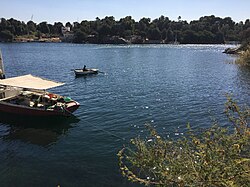
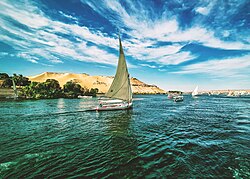
Picture credit: Vyacheslav Argenberg (CC BY 4.0) · Menna Saad 206 (CC BY-SA 4.0) · Hesham Farouk Ragab (CC BY-SA 4.0) · Wikimedia Commons
Where is Nile?
The river begins at Nyungwe Forest highlands, Rwanda.
It ends in the Mediterranean Sea.
Along the way it passes: Nyungwe Forest, Rwanda → Lake Victoria → Jinja, Uganda → Lake Albert / Nimule → Juba, South Sudan → Malakal, South Sudan → Khartoum, Sudan → Atbara, Sudan → Lake Nasser → Aswan, Egypt.
Countries on the river: Rwanda, Burundi, DR Congo, Tanzania, Kenya, Uganda, South Sudan, Sudan, Egypt, Eritrea, Ethiopia.
The story behind it
The Nile begins as a small stream in the misty hills of Rwanda and grows as it collects water from Lake Victoria, the mountains of Ethiopia and dozens of smaller rivers. It crosses deserts where almost no rain ever falls, yet ancient Egyptians built one of history's greatest civilisations along its banks, because the river's yearly floods left behind rich black soil perfect for farming. Today the Nile still waters crops for hundreds of millions of people in Sudan and Egypt. Nile crocodiles, hippos and colourful fish called Nile perch live in its waters. One surprising fact: geographers still argue about whether the Nile or the Amazon is truly the world's longest river, because both are so hard to measure exactly from source to sea.
Questions children ask
How long is the Nile River?
The Nile is about 6,650 kilometres long, making it one of the two longest rivers on Earth, alongside the Amazon. Experts still debate exactly which one is longest because both are tricky to measure precisely.
Which countries does the Nile flow through?
Water from the Nile basin passes through eleven countries, including Rwanda, Uganda, South Sudan, Sudan and Egypt. The river itself flows directly through about ten of these on its long journey to the sea.
Why was the Nile important to ancient Egypt?
Every year the Nile flooded and left behind rich, dark soil that was perfect for growing crops in the desert. This dependable farmland allowed ancient Egyptian civilisation to grow strong for thousands of years.
Where these numbers come from
Every figure on this page was checked against public reference sources before publication. Where sources genuinely disagree, the text says so.
Last checked: